Introduction
School administrators are navigating enrollment spikes, aging facilities, constrained construction budgets, and the pressure to create safe learning spaces quickly. According to the American Society of Civil Engineers, 53% of public school districts need to update or replace multiple building systems, and the average instructional building in the U.S. is 49 years old.
Modular classrooms have emerged as a leading solution — offering schools a faster, more predictable path to expanding capacity without the full disruption of traditional construction.
This guide walks through what modular classrooms are, how they differ from portable trailers, cost considerations, and how to equip them for modern instruction.
TLDR:
- Modular classrooms are prefabricated buildings constructed off-site to the same codes as traditional school buildings
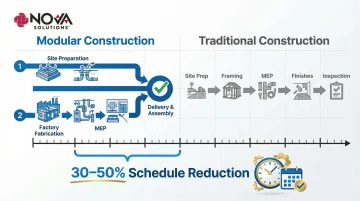
- Timelines shrink 30–50% compared to traditional construction through concurrent site prep and factory fabrication
- Schools can lease units for temporary needs or purchase for permanent expansion
- Modern modular classrooms include HVAC, electrical, plumbing, and ADA-compliant features
- Proper furniture and technology integration maximizes instructional effectiveness
What Is a Modular Classroom?
A modular classroom is a prefabricated educational building constructed off-site in a controlled factory environment, then transported and assembled on a school campus. These structures meet the exact same building codes and safety standards as traditionally constructed school buildings, including the International Building Code (IBC) and all applicable state and federal regulations.
How Modular Differs from Traditional Construction
The fundamental difference lies in the construction process. Modular buildings are fabricated in sections—called "modules"—using standard building materials and assembly-line methods in a climate-controlled factory. While modules are being built, site preparation work (foundations, utility connections, access systems) happens simultaneously at the school campus.
Traditional construction proceeds sequentially: site work must finish before framing begins, and weather delays can stretch timelines unpredictably. That parallel workflow is what enables 30-50% faster project completion compared to conventional on-site building.
Not Your Old Portable Trailer
Many administrators associate modular classrooms with the aging portable trailers scattered across campuses—units with poor insulation, inadequate HVAC, and a temporary feel. Modern modular classrooms have little in common with those older units. Today's modular classrooms feature:
- Durable exterior finishes indistinguishable from site-built structures
- Energy-efficient HVAC systems with proper insulation
- Natural lighting through code-compliant windows
- Fully finished interiors with professional-grade flooring and wall treatments
- Integrated electrical and plumbing systems
What's Included in a Standard Unit
A standard modular classroom arrives on campus substantially complete. Typical inclusions are:
- Complete electrical systems with outlets, lighting, and circuit panels
- Plumbing connections ready for tie-in to campus utilities
- HVAC equipment with ductwork and controls
- Insulation meeting or exceeding local energy codes
- Windows with screens and blinds
- Exterior and interior finishes (siding, drywall, paint, flooring)
- Access systems including ADA-compliant ramps and steps
- Fire safety systems (alarms, sprinklers where required)
Who Uses Modular Classrooms
Modular classrooms serve diverse educational settings:
- K–12 public school districts managing enrollment growth
- Charter schools launching new campuses quickly
- Private schools expanding facilities
- Community colleges and universities adding capacity
- Specialized spaces beyond standard classrooms: STEM labs, administrative offices, cafeterias, libraries, media centers, and counseling suites
That range—from a single classroom to a full administrative wing—is what makes modular a practical option for schools at any stage of growth.
Key Benefits of Modular Classrooms for Schools
Faster Timelines With Less Disruption
Time matters when enrollment is climbing or existing facilities are failing. Modular construction delivers 30-50% schedule reduction versus traditional building methods. A University of Utah study analyzing 17 permanent modular projects found average schedule reductions of 42-45% compared to site-built equivalents.
The speed advantage comes from parallel work streams: while your contractor prepares the site and pours foundations, the factory is simultaneously fabricating your classroom modules. When modules arrive on campus, they're 60-90% complete, requiring only final assembly, utility connections, and finishing touches.
Less disruption to campus operations:
- Minimal heavy machinery operating during school hours
- Reduced construction noise and dust
- Smaller construction footprint on campus
- Fewer safety hazards near active classrooms
- Students and staff maintain normal routines throughout the project
Cost Predictability and Budget Flexibility
School budgets leave little room for surprises. Modular construction offers greater cost certainty because factory-controlled environments eliminate the variables that plague traditional projects: weather delays, labor shortages, material theft, and unpredictable site conditions.
Factory construction forces design finalization before manufacturing begins, sharply cutting expensive change orders that inflate traditional construction budgets. Indoor storage protects materials from weather damage and theft. Assembly-line efficiency reduces labor costs.
Lease vs. purchase flexibility:
- Lease options allow schools to add capacity without capital expenditure, ideal for temporary enrollment spikes or while awaiting bond funding
- Purchase options provide permanent expansion at predictable costs
- Rent-to-own programs bridge short-term needs with long-term ownership goals
Whether a district needs a two-classroom solution this fall or a multi-wing expansion over three years, the financing structure can match the timeline.
Built to Code: Safety and Accessibility
Modular classrooms are engineered to meet the International Building Code (IBC) and all applicable state and federal safety regulations. The International Code Council and Modular Building Institute have established formal standards—ICC/MBI 1200-2021 and 1205-2021—governing the planning, design, fabrication, and inspection of off-site construction.
ADA compliance requirements include:
- Accessible ramps with proper slope ratios
- Doorways meeting width and clearance requirements
- Accessible restroom facilities in multi-unit buildings
- Proper turning radii for wheelchair users
- Compliant hardware and controls
Every modular classroom must pass third-party inspection before leaving the factory, ensuring these requirements are verified before installation begins.
Sustainability and Energy Efficiency
Schools committed to environmental responsibility find modular construction supports those goals in measurable ways. Factory construction dramatically reduces waste: materials are stored under roof, unused pieces are recycled into other projects, and precise cutting minimizes scrap. Research published in the ASCE Journal of Management in Engineering found that modular construction reduces on-site waste by an average of 78.8%.
Additional environmental benefits include:
- Reduced on-site carbon emissions from shorter construction timelines
- Less soil disruption and stormwater runoff during construction
- Energy-efficient building envelopes with superior insulation
- Potential for ENERGY STAR certification (modular buildings average higher scores than site-built counterparts)
- Opportunity to integrate solar panels and other green technologies during fabrication
A Department of Energy-funded study found that modular multifamily buildings achieved average ENERGY STAR scores of 86 compared to 81 for site-built structures, demonstrating the energy performance advantages of factory-controlled construction.
Types of Modular Classrooms: Configurations and Temporary vs. Permanent
Single vs. Multi-Classroom Configurations
Modular classrooms are available in three main configuration options:
Single standalone classrooms work best when you need:
- Ideal for targeted capacity additions (1-2 classrooms)
- Fastest to deploy and install
- Minimal site preparation requirements
- Typically 960-1,200 square feet per unit
- Best for filling specific enrollment gaps
Double or multi-classroom buildings are suited for moderate growth:
- Suited for moderate enrollment growth (3-6 classrooms)
- Can include shared restrooms and storage
- Internal corridors connecting spaces
- More efficient use of site space
- Better cost per square foot than single units
Full campus complexes or two-story buildings support large-scale expansion:
- Designed for significant expansion or new campus development
- Accommodate 10+ classrooms plus support spaces
- Include cafeterias, administrative offices, libraries
- Two-story designs maximize limited site footprints
- Indistinguishable from traditional school buildings once complete
The right configuration comes down to several site and program factors:
- Climate and weather considerations
- Available campus space and site constraints
- Expected usage duration
- Desired amenities (corridors, restrooms, specialized spaces)
- Budget and funding mechanisms
Temporary vs. Permanent Modular Classrooms
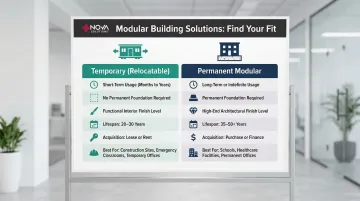
Temporary (Relocatable) Modular Classrooms
- Designed for short-to-medium-term use, typically 2-5 years
- Leased rather than purchased in most cases
- Engineered for disassembly, transport, and reuse at different sites
- Lifespan of 20-30 years with proper maintenance
- Set on non-permanent foundations (piers, blocks)
- Lower upfront cost with monthly lease payments
- Ideal for enrollment fluctuations, construction swing space, or pilot programs
Permanent Modular Classrooms
- Built for long-term or indefinite use
- Affixed to permanent foundations (concrete slabs, grade beams)
- Available with higher-end architectural finishes and customization
- Lifespan of 35-50+ years, comparable to site-built structures
- Purchased as capital assets
- Indistinguishable from traditional buildings once complete
- Suitable for master-planned campus expansion
If your enrollment spike is short-term, a leased relocatable unit keeps costs low and preserves flexibility. For districts making long-range campus investments, permanent modular construction delivers comparable durability to site-built facilities at a faster timeline and lower cost.
How Much Does a Modular Classroom Cost?
Modular classroom pricing varies significantly based on project-specific factors. While exact per-square-foot costs fluctuate by region and market conditions, understanding the key cost drivers helps administrators budget accurately.
Key Factors Affecting Pricing
Temporary vs. permanent use: Relocatable units designed for lease and reuse cost less upfront; permanent modular buildings with custom finishes and permanent foundations carry a higher price tag but a longer service life.
Size and configuration: Single classrooms (960–1,200 sq ft) carry higher per-square-foot costs. Multi-classroom buildings achieve better economies of scale, and two-story designs maximize space on constrained sites.
Customization level: Standard layouts cost less. Specialized spaces — STEM labs, maker spaces — require added infrastructure, and architectural features matching your existing campus buildings or integrated AV systems increase the investment.
Site work complexity: Soil conditions, distance to utility connections (water, sewer, electrical, data), foundation type, and required grading or drainage work all drive costs up or down.
Delivery and installation: Transportation distance from the factory, crane requirements for multi-story configurations, and local labor rates for final assembly all factor into the total.
What's Typically Included vs. Excluded
Base modular classroom quotes often exclude critical site-related expenses. Verify whether your quote includes:
- Site preparation and grading
- Foundation construction
- Utility connections and runs
- Access systems (ramps, stairs, walkways)
- Final assembly and installation labor
- Permits and inspection fees
- Furniture, fixtures, and equipment
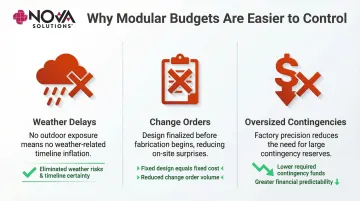
Why Modular Budgets Are Easier to Control
Modular construction gives school administrators more budget confidence than traditional building. Because work happens in a factory-controlled environment, three cost leaks common to site-built projects are largely eliminated:
- Weather delays that push timelines and inflate labor costs
- Change orders triggered by on-site surprises
- Oversized contingency reserves built into traditional construction contracts
Schools watching cash flow can also consider lease options, which spread costs over time and avoid a large upfront capital outlay.
When comparing quotes from multiple providers, confirm each one covers the same scope — site prep, utility runs, permits, and assembly — so you're comparing total project costs, not just the building price.
Equipping Your Modular Classroom for Modern Learning
The building shell is only half the equation. How a modular classroom is furnished and equipped directly affects student engagement, teacher effectiveness, and the return on your facility investment.
Essential Interior Setup Categories
Functional modular classrooms require:
- Student workstations and desks sized appropriately for grade level and instructional activities
- Teacher stations with adequate work surface, storage, and technology access
- Storage solutions for materials, supplies, and student belongings
- Display surfaces including whiteboards, projection screens, or interactive displays
- Flexible seating options supporting varied teaching formats
Technology-Integrated Furniture for Modern Instruction
Furniture built around technology — not retrofitted for it — keeps classrooms functional and safe. Key features to look for:
- Work surfaces sized for monitors, keyboards, and physical workspace side-by-side
- Concealed cable routing that eliminates cord clutter and trip hazards
- Built-in power access at each station, reducing extension cord dependence
- Organized pathways for data, power, and peripheral connections
- Proper monitor depth and height to prevent glare and ergonomic strain
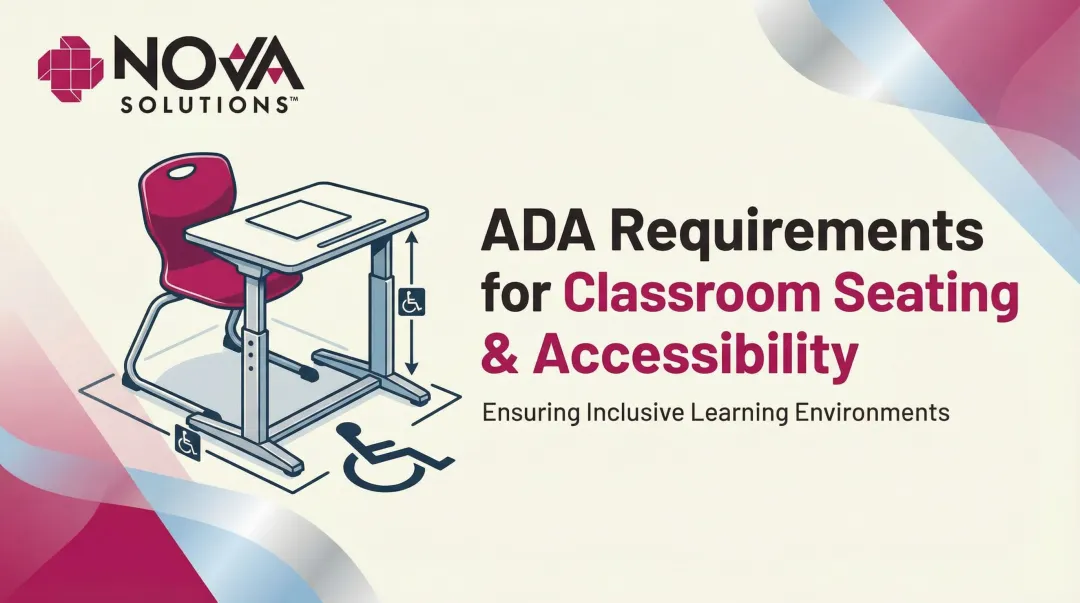
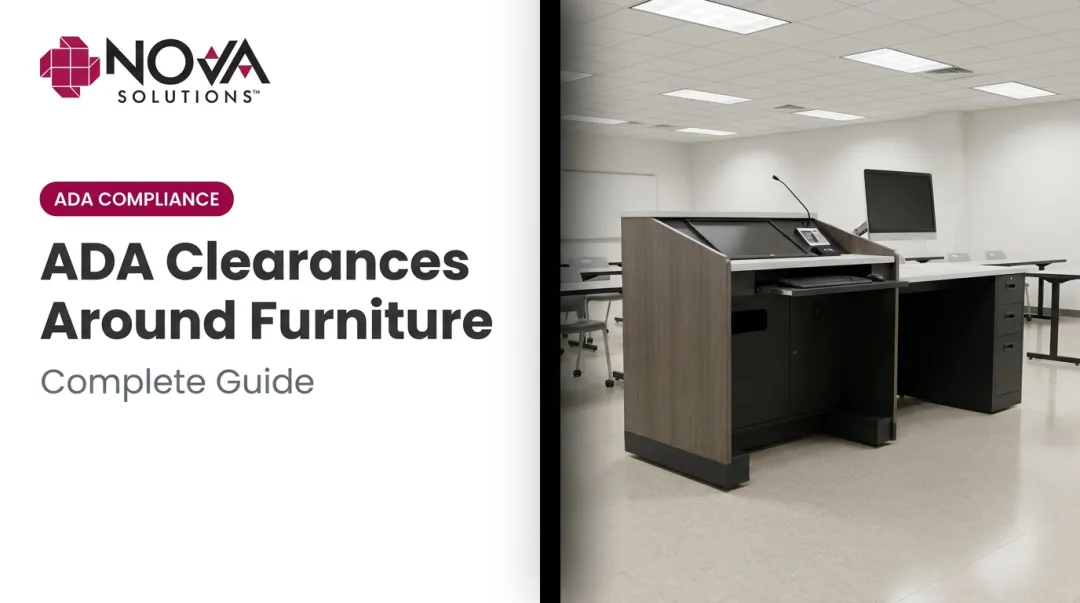
- ADA-compliant clearances: appropriate height, knee space, and accessible power outlets for wheelchair users
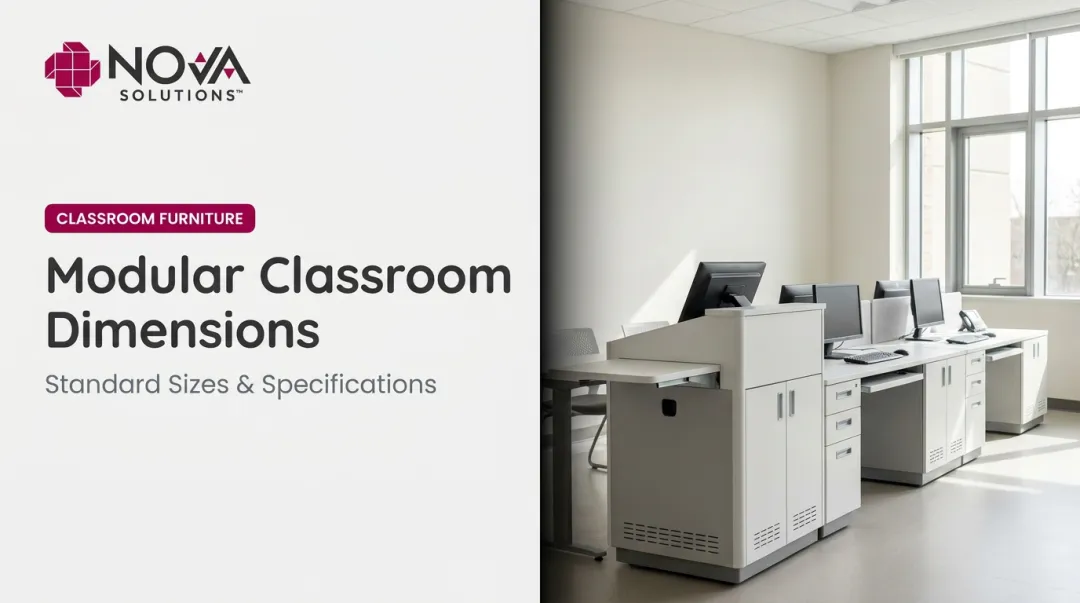
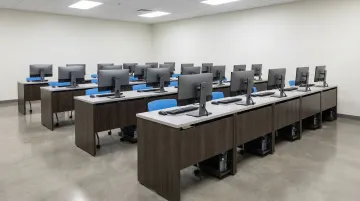
NOVA Solutions' computer training desks address these needs directly. The iMod™ wire management system routes cables within dedicated compartments for clean, professional environments. Their Downview™ technology recesses monitors below the work surface under tinted glass, reducing neck strain and freeing up desktop space — useful when students work with both a screen and physical materials simultaneously. ADA-compliant configurations are also available, ensuring equal technology access for all students.
Flexibility Maximizes Space Utility
Modular and reconfigurable furniture allows a single classroom to serve multiple learning activities:
- Lecture configuration: Rows facing front for direct instruction
- Group work: Clustered tables for collaborative activities
- Lab activities: Stations arranged for hands-on experimentation
- Assessment: Individual spacing for testing scenarios
Furniture with casters, folding capabilities, and modular designs enables quick reconfiguration without requiring additional rooms or construction. One room can realistically handle four or five different use cases across a single school day.
How to Add a Modular Classroom to Your School
High-Level Process Steps
1. Site selection and assessment:
- Evaluate grade, drainage, and soil conditions
- Confirm proximity to utilities (water, sewer, electrical, data)
- Verify zoning compliance and setback requirements
- Assess accessibility and traffic flow
2. Design and configuration decisions:
- Determine classroom count and layout
- Select temporary vs. permanent designation
- Choose finishes and customization level
- Plan technology and furniture integration
3. Permitting and approvals:
- Submit plans to local building department
- Obtain necessary permits and approvals
- Coordinate with fire marshal and health department
- Note: This stage has the most timeline variability depending on municipality
4. Site preparation (concurrent with fabrication):
- Clear and grade site
- Install foundations
- Run utility connections
- Prepare access routes for delivery
5. Factory fabrication:
- Modules constructed in controlled environment
- MEP systems installed
- Interior finishes completed
- Quality inspections conducted
6. Delivery and installation:
- Transport modules to campus
- Crane modules onto foundations
- Connect utilities and systems
- Complete final finishes and punch list
7. Certificate of occupancy:
- Final inspections by authorities having jurisdiction
- Systems testing and commissioning
- Certificate issued for occupancy
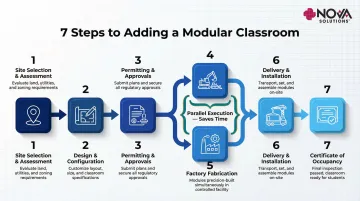
Realistic Timeline Expectations
General timeframe from contract to occupancy for a standard modular classroom project: 8-20 weeks. Traditional construction runs 6-12 months or more for equivalent scope — modular delivery is consistently faster.
Timeline variables include:
- Permitting duration (most unpredictable factor)
- Site complexity and preparation requirements
- Transportation distance and logistics
- Weather during site work and installation
- Municipality inspection schedules
Selecting a Modular Provider
Look for these qualities when evaluating providers:
- Request references from similar K-12 or higher education projects — not just general commercial work
- Verify financial stability; a provider that can't complete your project creates costly delays
- Scrutinize proposal documentation — detailed, transparent scopes signal how they'll manage your project
- Pay attention to communication speed during bidding; it predicts behavior once work starts
- Prioritize providers offering turnkey services (site work, permitting support, installation) to reduce coordination overhead
Get proposals from at least three providers. Price matters, but a lower bid with a vague scope often costs more in change orders.
Frequently Asked Questions
What is a modular classroom?
A modular classroom is a prefabricated educational building constructed off-site in a factory, then transported and assembled on a school campus. These structures are built to meet the same building codes and safety standards as traditional school buildings.
What is the average cost of a modular classroom?
Costs vary significantly based on size, customization level, temporary vs. permanent designation, and site-specific factors. For accurate pricing tailored to your project requirements, request detailed quotes from qualified modular providers that include all site work, delivery, and installation costs.
Are modular classrooms temporary or permanent?
Modular classrooms can be either temporary (relocatable units typically leased for 2-5 years) or permanent (affixed to foundations lasting 35-50+ years). Which option fits depends on your enrollment projections, budget, and facility plan.
Do modular classrooms have bathrooms?
Larger modular classroom buildings and campus complexes can include fully-equipped restroom facilities. Single-unit classrooms typically connect to the school's existing plumbing infrastructure or are paired with separate modular restroom units, depending on building codes and campus layout.
How long does it take to install a modular classroom?
Typical modular classroom projects run 8-20 weeks from contract signing to certificate of occupancy. This represents a 30-50% schedule reduction compared to traditional construction timelines of 6-12 months or more for similar scope.
What are the 7 principles of classroom design?
The seven core classroom design principles are:
- Flexibility — supports multiple instructional modes
- Natural lighting — reduces eye strain and supports circadian rhythms
- Accessibility — ensures all students can fully participate
- Acoustic control — minimizes noise distractions
- Technology integration — supports modern instruction tools
- Safety — meets all applicable codes and best practices
- Student-centered layout — promotes engagement and collaboration
Modular classrooms can be designed to address all seven when properly specified.