Introduction
By late 1932, British India stood at a constitutional crossroads marked by escalating tensions and political deadlock. The Gandhi-Irwin Pact had collapsed, and the Civil Disobedience Movement had resumed. Indian National Congress leaders — Mahatma Gandhi among them — were imprisoned under emergency ordinances. Against this backdrop of distrust and repression, the British government convened the Third Round Table Conference in London from November 17 to December 24, 1932.
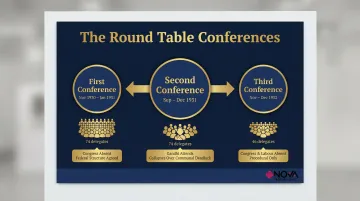
This final conference was the shortest and least productive of the three sessions held between 1930 and 1932. With only 46 delegates attending (down from 74 at the first session) and critical voices absent, it became largely a procedural exercise rather than a genuine negotiation. Its deliberations nonetheless directly influenced the Government of India Act of 1935 — the constitutional framework governing India until independence.
Key Takeaways:
- The Third Round Table Conference (Nov 17–Dec 24, 1932) was the smallest and least effective of three constitutional negotiations
- Congress boycotted entirely; the British Labour Party also refused to attend
- The Communal Award (August 1932) had already imposed separate electorates, pre-empting key debates
- Conference recommendations directly shaped the Government of India Act of 1935
- The process deepened communal divisions and left many nationalists disillusioned with constitutional negotiation
Background: The Road to the Third Round Table Conference
Origins in the Simon Commission
The Round Table Conferences emerged from the constitutional review process initiated by the Simon Commission, which published its report in 1930. Named after Sir John Simon, the all-British commission had been tasked with examining the Government of India Act of 1919 and recommending reforms.
The commission's exclusion of Indian members sparked widespread protests across India. Its findings nonetheless compelled the British government to convene direct negotiations with Indian stakeholders over constitutional reform.
The First Round Table Conference (November 1930–January 1931)
The First Conference brought together 74 delegates representing diverse Indian constituencies—princes, Muslims, Sikhs, depressed classes, and liberal politicians. Notably absent was the Indian National Congress, which boycotted the proceedings due to the ongoing Civil Disobedience Movement launched by Gandhi earlier that year.
Despite this significant gap in representation, the conference achieved preliminary consensus on two foundational principles:
- A federal constitutional structure uniting British India and the princely states
- Dominion status as the ultimate constitutional goal for India
These agreements set the framework for subsequent negotiations. Yet without Congress—India's largest political organization—no settlement could hold without further talks.
The Second Round Table Conference (September–December 1931)
Following the Gandhi-Irwin Pact of March 1931, which temporarily suspended the Civil Disobedience Movement, Mahatma Gandhi attended the Second Conference as Congress's sole representative. This session raised hopes for breakthrough negotiations on self-government and constitutional reform.
The conference collapsed over communal representation and minority rights. Key fault lines included:
- Hindu, Muslim, Sikh, and depressed class representatives could not agree on electoral arrangements
- Gandhi's claim that Congress represented all Indians—regardless of religion or caste—was rejected by minority community leaders
Gandhi returned to India empty-handed. The pact with Viceroy Irwin unraveled, and the Civil Disobedience Movement resumed in early 1932.
What Was the Third Round Table Conference?
Core Facts and Timeline
The Third Round Table Conference convened in London from November 17 to December 24, 1932, under the auspices of Prime Minister Ramsay MacDonald's National Government. At just over five weeks, it was the shortest of the three sessions, reflecting its limited ambitions and diminished political significance.
Unlike its predecessors, the Third Conference was not designed to forge new political agreements. Its stated agenda was narrowly technical: to review and consolidate recommendations from earlier sessions, particularly those of the Federal Structure Committee and Minorities Committee, and to address remaining gaps in the constitutional framework.
The Communal Award Pre-empts Key Debates
Before the conference even began, the British government unilaterally resolved one of the most contentious issues from the Second Conference. On August 16, 1932, Prime Minister MacDonald announced the Communal Award, which extended separate electorates to the following communities in provincial legislatures: Muslims, Sikhs, Indian Christians, Anglo-Indians, Europeans, and the Depressed Classes (Dalits).
This decision institutionalized communal representation without Indian consensus, imposing a solution that many Indian leaders—particularly within Congress—had opposed.
The Award's provision for separate Depressed Class electorates prompted Gandhi to undertake a fast unto death in September 1932. This brought about the Poona Pact between Gandhi and Dr. B.R. Ambedkar. The Pact replaced separate electorates for Depressed Classes with reserved seats in joint electorates, modifying but not overturning the Communal Award's framework.
With communal representation settled by British decree before delegates even arrived, the Third Conference was left to work within a framework it had no power to reopen.
Key Participants at the Third Round Table Conference
The Defining Absences
The Third Conference was shaped more by who did not attend than by who did. Three absences defined its limits:
- Indian National Congress: Boycotted entirely. Gandhi and other Congress leaders had been imprisoned under Bombay Regulation XXV of 1827 following their January 1932 arrests; Gandhi remained detained in Yeravda Central Prison throughout the proceedings.
- British Labour Party: Refused to participate. Labour had been a relatively sympathetic voice for Indian aspirations in earlier sessions. Its absence left the conference dominated by the Conservative-heavy National Government, which faced pressure from right-wing imperialists opposed to meaningful reform.
- Muhammad Ali Jinnah: Stepped back from the process entirely. By 1932, Jinnah had largely retreated from Indian politics, disillusioned by Hindu-Muslim representational deadlocks, and was increasingly based in London.
The 46 Delegates Who Attended
The drastically reduced attendance—46 delegates compared to 74 at the first session—reflected the conference's diminished scope and legitimacy. Key participants included:
- Sir Tej Bahadur Sapru: Prominent liberal politician and constitutional expert
- H.H. the Aga Khan: Leader of the Muslim delegation
- Dr. B.R. Ambedkar: Representative of the Depressed Classes, fresh from negotiating the Poona Pact
- N.C. Kelkar and Pandit Nanak Chand: Hindu Mahasabha representatives
- Princely state representatives: Including Sir Manubhai Mehta and various maharajas
With neither Congress nor Labour at the table, the delegates who did attend represented communities and interests — but not the mass political movements that any constitutional settlement would ultimately need to survive. The result shaped what the conference could realistically produce: technical groundwork, not a political mandate.
Proceedings: What Was Discussed at the Third Round Table Conference?
Committee Work and Technical Deliberations
The Third Conference organized its work through specialized committees addressing specific constitutional details:
- Distribution of Legislative Powers — divided authority between the federal center and provincial units, defining jurisdictional boundaries and areas of concurrent legislation
- Federal Finance Committee — allocated revenue, taxation powers, and financial responsibilities across central and provincial governments
- Financial and Commercial Safeguards — reviewed protections for British commercial interests and financial obligations within the proposed constitutional structure
Muslim Representation Secured
The Muslim delegation, led by the Aga Khan, submitted a memorandum demanding one-third representation in the Federal Legislature. In his closing statement on December 24, 1932, the Secretary of State confirmed that the government accepted this position, granting Muslims 33⅓% of British Indian seats in both chambers of the proposed Federal Legislature.
This was a clear victory for Muslim political interests, though it further entrenched communal rather than territorial representation in India's constitutional framework.
Hindu Mahasabha Protests
Hindu Mahasabha delegates, including N.C. Kelkar and Pandit Nanak Chand, submitted strong protests against the Communal Award. Their memorandum argued the Award was "greatly adverse to Hindu interests" and criticized the British government for imposing a decision that undermined sound constitutional principles.
Without Congress at the table, however, these protests carried limited weight.
Princely States Remain Cautious
Representatives from India's princely states expressed continued interest in joining an All-India Federation but emphasized their reluctance to commit without seeing the complete constitutional document. They insisted on safeguards for their treaty rights and internal autonomy, raising questions that would remain unresolved and ultimately prevent the federal provisions of the 1935 Act from ever being implemented.
The White Paper Foundation
The British government presented consolidated draft proposals incorporating the work of all three conferences. These proposals were published in March 1933 as a White Paper (Cmd. 4268), which was then referred to a Joint Select Committee of Parliament for detailed examination—the next step toward the Government of India Act of 1935.
Why Did the Third Round Table Conference Fail?
Congress's Absence: The Fatal Flaw
Congress's absence was the conference's central failure. As the organization commanding the broadest popular support across India, its participation was essential for any constitutional settlement to carry democratic legitimacy. Without Congress at the table, the conference couldn't claim to represent Indian public opinion—and any agreements reached would be unenforceable on the ground.
The British government had created this structural problem by resuming mass arrests of Congress leaders in January 1932, effectively choosing repression over negotiation. The contradiction was glaring: the British claimed to seek Indian input on constitutional reform while simultaneously imprisoning the leaders of India's largest political movement.
The Communal Deadlock
Even among the delegates who attended, irreconcilable positions on communal representation persisted. The Communal Award had already imposed a solution, but minority communities and Hindu nationalist groups continued to hold fundamentally opposed views on separate electorates and reserved seats.
Because the Award had been announced unilaterally before the conference, delegates were discussing a fait accompli rather than negotiating a genuine compromise. The result: ratifying British decisions instead of forging Indian consensus.
Conservative Constraints and Churchill's Opposition
The British National Government formed in 1931 was heavily dominated by the Conservative Party, which faced intense pressure from right-wing imperialists. Winston Churchill, leading the India Defence League founded in 1933, vehemently opposed the Round Table Conference process and any significant transfer of power to Indians.
Conservative dominance sharply constrained the negotiating space available to British delegates, who were wary of concessions that would alienate their right-wing base. The government's primary concern was managing political pressures at home, not achieving a constitutional settlement with India.
Key pressures shaping the British position included:
- Churchill's India Defence League lobbying aggressively against self-government
- Conservative MPs resistant to any meaningful power transfer
- Coalition dynamics favoring the status quo over compromise
The Conference Format's Structural Weakness
The Round Table Conference format itself contained an inherent flaw: with no binding mechanism to enforce outcomes and with the British government retaining the right to impose its own solution, Indian delegates had little incentive to make significant concessions. They knew the British could override any agreement, which undermined the conference's credibility as genuine negotiations.
As one contemporary observer noted, the Third Conference showed "diminished ambition and procedural focus"—a stark contrast to the Second Conference, which at least featured Gandhi and attempted genuine negotiation over self-government.
The Lasting Impact: How the Third Round Table Conference Shaped Indian Constitutional History
The Government of India Act of 1935
The deliberations of all three conferences, culminating in the Third, were consolidated into the March 1933 White Paper, which a Joint Select Committee of Parliament reviewed and refined. This process produced the Government of India Act of 1935, which received Royal Assent on August 2, 1935.
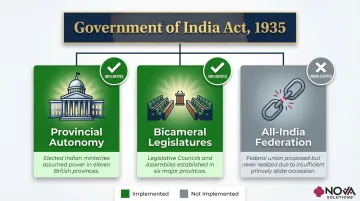
The Act provided:
- Provincial autonomy: Elected Indian governments in eleven provinces with significant powers over local affairs
- Bicameral legislatures: Legislative Councils and Assemblies in six major provinces
- Proposed All-India Federation: A federal structure uniting British India and princely states (never implemented due to insufficient princely state accession)
The 1935 Act represented the most extensive constitutional reform Britain had ever granted to a colonial territory, yet it fell far short of Indian demands for self-government. It retained significant British controls, including reserved powers for governors and the viceroy, and its federal provisions remained a dead letter.
Deepening Political Distrust
The failure of the Third Conference and the imposition of the Communal Award deepened distrust between Congress and the British government. It strengthened the argument of more radical nationalists—including Subhas Chandra Bose—that constitutional negotiation was futile and that only direct action could achieve independence.
That conviction—that Britain would never voluntarily transfer meaningful power—accelerated the momentum toward the Quit India Movement of 1942 and the eventual demand for complete independence.
Institutionalizing Communal Divisions
Historians have noted that the Round Table Conference process, particularly through the Communal Award, institutionalized communal divisions in Indian politics. By granting separate electorates and community-based political representation, the conferences deepened Hindu-Muslim tensions throughout the 1930s and 1940s.
This communal framework, embedded in the 1935 Act's electoral provisions, shaped political competition along religious rather than ideological or class lines—setting the stage for the partition of India in 1947.
The Modern Legacy of Structured Dialogue
Despite its failures, the Round Table Conference model—bringing together government representatives, minority communities, and political leaders around a shared table—remains influential in constitutional negotiations and policy-making forums worldwide. The concept of structured, multi-stakeholder dialogue as a path to constitutional settlement has been replicated in peace processes and constitutional conventions from South Africa to Northern Ireland.
That enduring model—structured, inclusive, multi-party deliberation—stands as one of the Round Table Conferences' most tangible contributions to modern democratic practice, even as the conferences themselves produced outcomes far short of what Indian political leaders had sought.
Frequently Asked Questions
When was the Third Round Table Conference held?
The Third Round Table Conference was held in London from November 17 to December 24, 1932, convened by Prime Minister Ramsay MacDonald's National Government. It was the shortest of the three Round Table Conference sessions.
Why did the Indian National Congress boycott the Third Round Table Conference?
The Gandhi-Irwin Pact had collapsed after the Second Conference, and the British government resumed mass arrests of Congress leaders — including Gandhi — under Bombay Regulation XXV of 1827 in January 1932. With the Civil Disobedience Movement re-launched, Congress saw no basis for participation.
Who attended the Third Round Table Conference?
Approximately 46 delegates attended, including representatives from princely states, the Muslim League (led by the Aga Khan), Hindu Mahasabha, depressed class groups led by Dr. B.R. Ambedkar, and liberal politicians like Sir Tej Bahadur Sapru. Notably absent were Congress and the British Labour Party.
What was the main outcome of the Third Round Table Conference?
The conference produced no significant new political agreements but its consolidated recommendations, combined with those from the earlier sessions, formed the basis for the White Paper of March 1933 and ultimately the Government of India Act of 1935.
How did the Third Round Table Conference differ from the Second?
The Second Conference featured Gandhi as Congress's representative and attempted genuine negotiation over self-government, while the Third was shorter, had far fewer delegates (46 vs. 74), lacked both Congress and Labour participation, and was largely a procedural exercise consolidating earlier proposals.
What was the connection between the Communal Award and the Third Round Table Conference?
Prime Minister MacDonald announced the Communal Award in August 1932, before the Third Conference convened, effectively pre-empting the communal representation debate. The Poona Pact (September 1932) modified it for Depressed Classes, but the Award's separate electorates framework still dominated the conference's minority rights discussions.